
 ZH
ZH  RU
RU  EN
EN 
"Mountain Pharmacy" Museum of Pharmaceutical History
Address: 42 Polzunova St., Barnaul city
Contacts:
Tel.: +7 (385) 253-62-67
Website: gornaya-apteka.ru/#about
Opening hours:
- Museum: daily from 10:00 to 20:00
📍Посмотреть на карте
[ ▶︎ ] Video Review
Brief historical background, collections and exhibitions of the museum
Status: LLC Tourist Center "Gornaya Apteka".
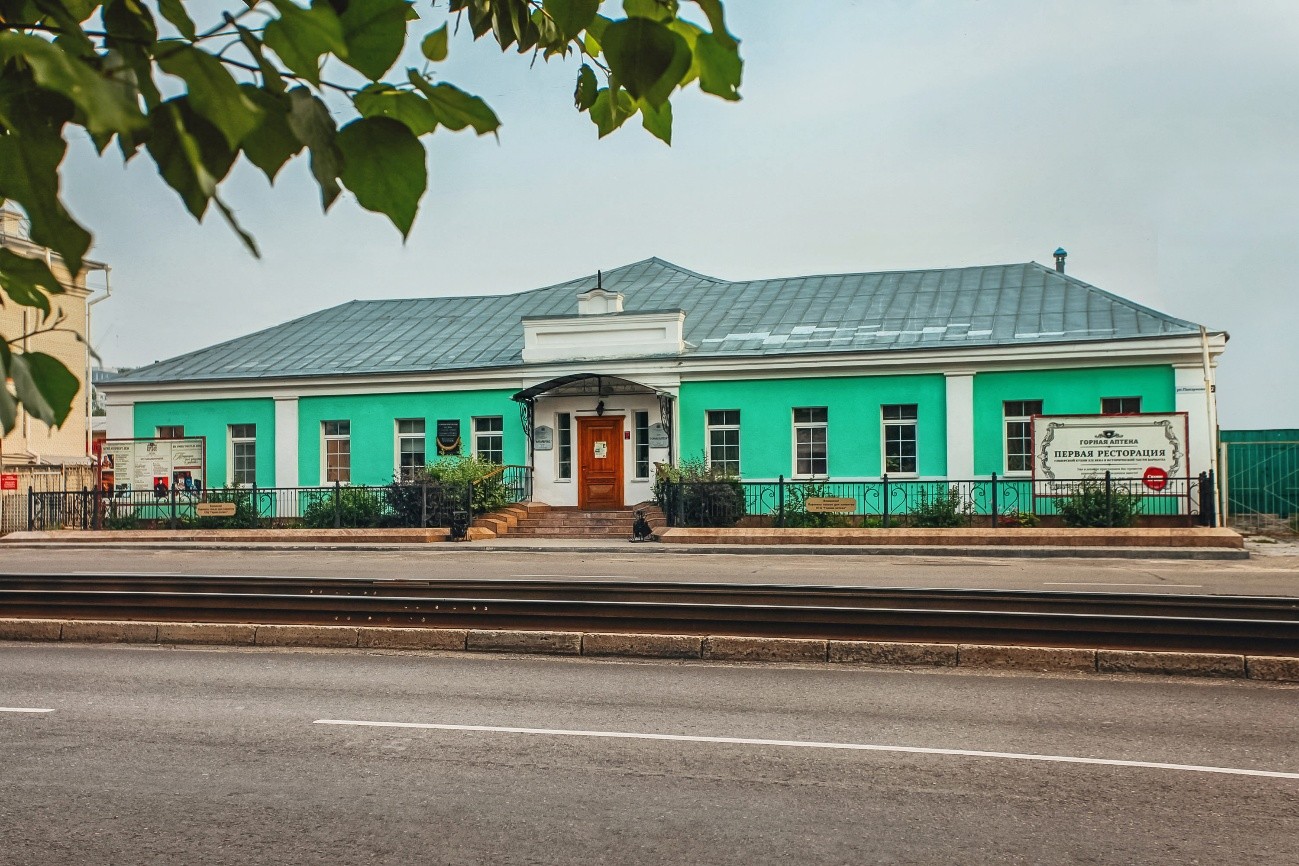
"Gornaya Apteka" (Mountain Pharmacy) is a unique monument of 18th-century history and architecture, the first brick building in Barnaul, which appeared in the Altai Mining District during the time of Akinfiy Demidov's mining factories. "Gornaya Apteka" was the first pharmacy in Altai and one of the first in Siberia. Over different periods, prominent travelers and researchers lived and worked here: Peter Simon Pallas, Friedrich Gebler, Carl Ledebour, Erik Laxman. Currently, the "Gornaya Apteka" building has been restored and houses a welcoming tourist center.
The museum was opened on January 28, 1986. Its creation was preceded by extensive research work conducted since the mid-1970s by faculty and staff of the archaeology department and laboratory, as well as students. They carried out excavations in many areas of the mountainous and steppe Altai, collecting valuable archaeological material that later formed the basis of the museum's exhibition. Since 1978, after the establishment of the Laboratory of Archaeology, Ethnography, and History of Altai, the work of collecting archaeological collections became more focused. An important role in the museum's formation was played by an exhibition of finds from Altai archaeological sites, organized in 1984 as part of a visit by Japanese archaeologists. The premises of the Museum of the History of Education in Altai, complete with display cases, were provided for the exhibition. The next stage in the museum's creation was the opening of an archaeological exhibition in 1985, timed to coincide with the visit of Geidar Aliyevich Aliyev, a member of the Central Committee of the CPSU. This visit was important for the university, as Vasily Ivanovich Neverov, the first rector of Altai State University, was a confidant of Geidar Aliyev. The first tour of the new exhibition was conducted by Yuri Fedorovich Kiryushin. G.A. Aliyev, being a historian, was very pleased that the staff of the archaeology laboratory had collected such rich archaeological material. After 1985, under the leadership of Yuri Fedorovich Kiryushin, active work continued to fill the museum's exhibition with ancient artifacts. The museum was officially opened by order of the Minister of Higher and Secondary Education of the RSFSR, I. F. Obraztsov (No. 74 dated 28.01.1986) "to improve the organization of the educational process at Altai University" and received the official name "Museum of Archaeology and Ethnography of Altai".
Visiting the museum, you will find yourself in a conceptual space of pharmacy, get a unique opportunity to get acquainted with the products of leading Altai enterprises and taste Siberian cuisine in the restaurant.
The exhibition of the "Gornaya Apteka" museum consists of two sections. The first section is dedicated to the history of pharmacy organization in Altai in the second half of the 18th – first half of the 19th century. It presents material revealing the history of Barnaul as a large industrial center of Russia and the reasons for organizing the first pharmacy in Altai. Exhibits on the study of Siberian flora and the creation of a pharmacy garden at "Gornaya Apteka" are displayed. It tells about the first doctors of Altai who contributed to the study of Siberian flora.
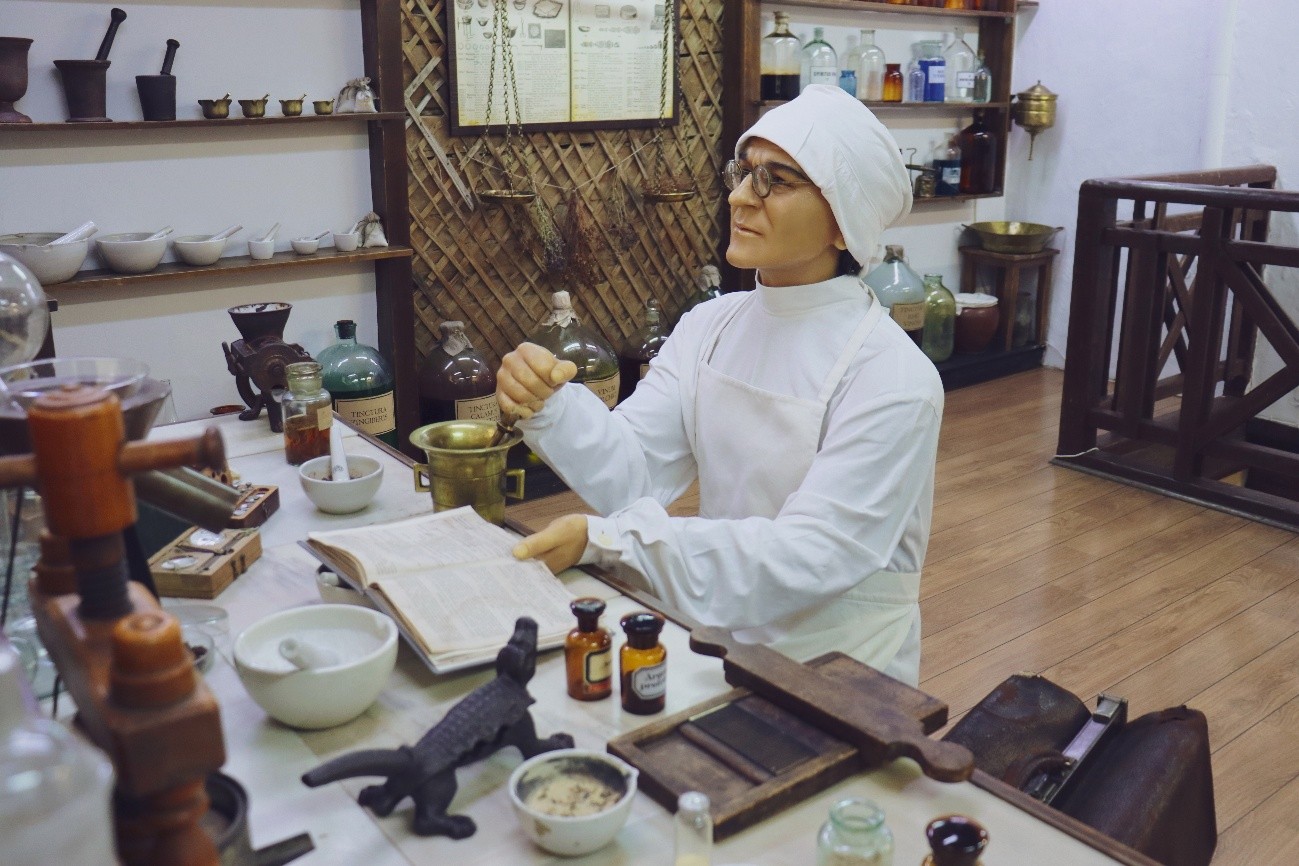
The second section traces the history of the development of pharmacy and pharmacology in the second half of the 19th – early 20th century. With the help of material and written sources, statistics on the opening of pharmacies in the district, advertising of pharmacies and preparations are revealed. In the same section, a pharmacy laboratory for the manufacture of preparations has been reconstructed. The exhibits placed in the laboratory recreate the stages of processing plant raw materials and preparing medicines from them: grinding, sifting, drying, pressing, obtaining tinctures and extracts. Pharmacists used hand herb cutters to grind plants, and disc mills to grind roots, bark, and fruits. Hand presses of various designs were used to squeeze juice from plants. From the prepared raw materials, pills and tablets were made using a pill machine or a tablet machine.
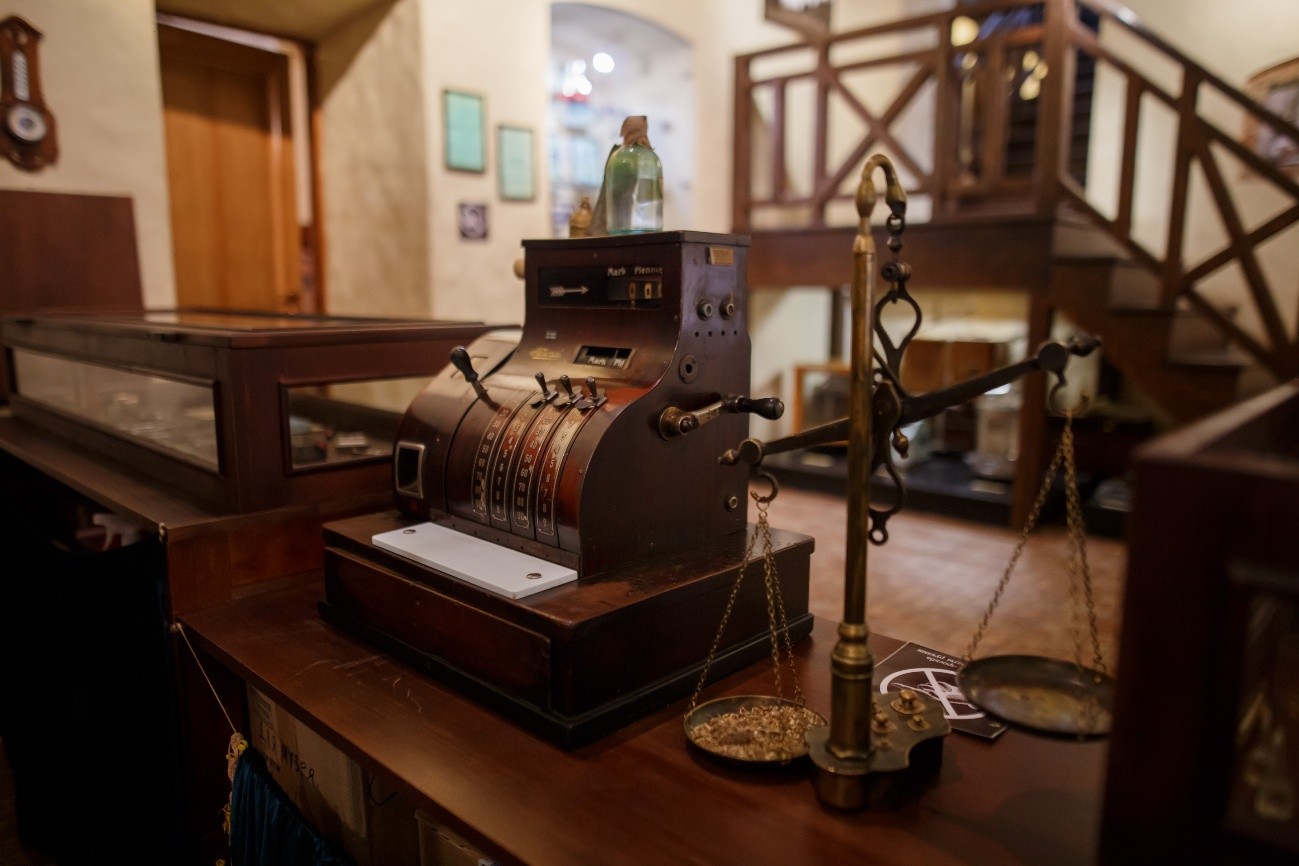
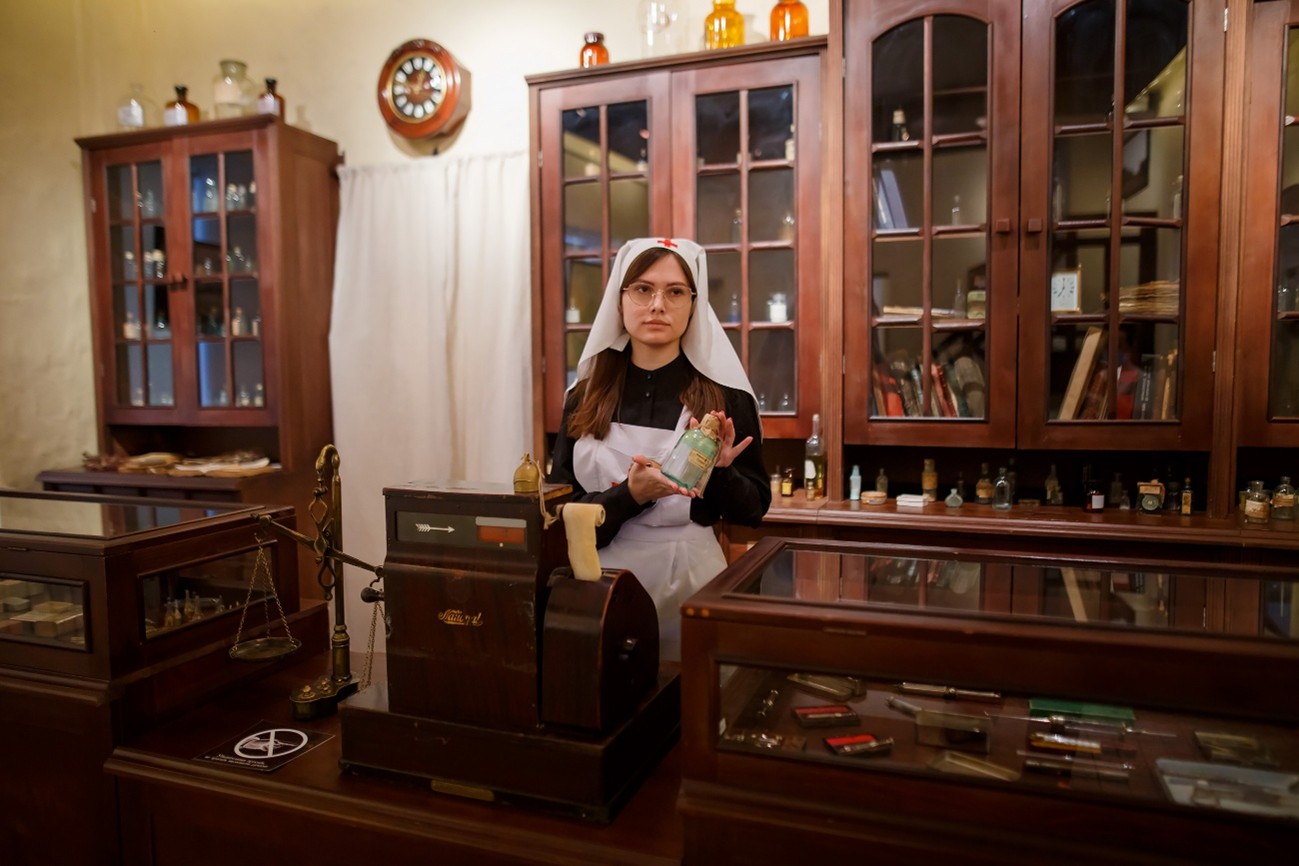
The museum exposition concludes with a pharmacy for dispensing medicines, where visitors can see a reconstruction of a pharmacy cabinet and a counter with a cash register from the late 19th century. On the shelves of pharmacy cabinets are numerous pharmacy bottles, bottles for preparations with labels, prescriptions, medical equipment: syringes, heating pads, surgical sets, thermometers, and other medical items that could be bought at a pharmacy in the 19th century.
The result of the work done was the created collection, a museum fund formed from copies of archival materials from the State Archive of Altai Krai and the Altai State Museum of Local Lore. The tangible fund was completed by purchasing items and receiving them as gifts. Particularly interesting finds were items found during restoration – signatures, prescriptions, labels, pharmacist's work journals, checks, pharmacy bottles, vials, ampoules with unknown liquid inside, hand herb cutters, stone mortars with pestles, weights, forged items, coins, pharmacy utensils dating from the 19th – first half of the 20th century.
"Gornaya Apteka" is located in the historical center of the city, on the very street from which Barnaul began almost 300 years ago. This street, once called Petropavlovskaya, today bears the name of I.I. Polzunov.

